Solitaire Word Association
- 4.6
- Rating
- 50.00K
- Installs
- Free
- Price
 Analysis by App-foxy
I approached Solitaire Word Association expecting a familiar word game with a card-game rhythm, and that is exactly where its appeal sits. It combines the quiet concentration of arranging words with the recognizable structure of solitaire, creating something that feels more deliberate than a quick anagram challenge but less demanding than a long-form puzzle session. I found it easiest to enjoy in short, focused bursts, especially when I wanted a game that occupied my hands without demanding constant attention.
This is a free word game from PlaySimple Games, rated for Everyone and available for devices running Android 7.0 or later. Its current version is 1.16.0, and the store summary presents it as a classic word solitaire experience. That description is brief, but it points toward the central idea: the game is built around combining vocabulary practice with the familiar sense of clearing and organizing a solitaire board.
My overall impression is positive, with one important qualification. The game works best if you enjoy gradual progress, repeated word-solving, and a calm pace. If you want a traditional card solitaire game, a competitive word battle, or a puzzle with a sharply defined ending, this may not be the right fit. Its strength is the steady loop rather than dramatic variety.
You May Also Like

 Blood Strike: 2.5 Anniversary
Blood Strike’s Loadouts Turn Every Drop Into a Tactical Gamble
A close look at Blood Strike’s custom loadouts: how fast access to signature weapons reshapes its battle royale rhythm, rewards preparation, and narrows the gap between fights.

 Pandora - Music & Podcasts
Pandora’s Music Is Easy to Start, but Harder to Recover
Pandora’s strength is its low-effort path from a seed to a station. Its weak spot is how much confidence it asks you to place in connection, setup, and quiet recovery.

 8 Ball Pool
 Is Built on Rivalries, Rematches, and Routine
A close look at the rivalries, rematches, shared routines, and unanswered safety questions that turn a quick pool match into a persistent mobile community.

 Samsung Music
’s Quiet Strength Is Playing What You Already Own
Its reach comes less from spectacle than from dependable access to a personal library. That simplicity is both the app’s strongest retention engine and its ceiling.

 AccuWeather: Weather Radar
AccuWeather Review: A Quick, Clear Forecast for Everyday Decisions
For everyday plans, the best forecast is the one you can understand quickly. AccuWeather makes rain timing, radar, and local conditions easy to act on, with a few trade-offs.

 Hill Climb Racing
Why Hill Climb Racing Still Turns Crashes Into One More Run
A tiny car, a bumpy hill and one more upgrade: Hill Climb Racing keeps resurfacing because its simple chaos makes every near-miss feel personal.
More From Our News Desk
View All News


How the first goals shape the opening hours
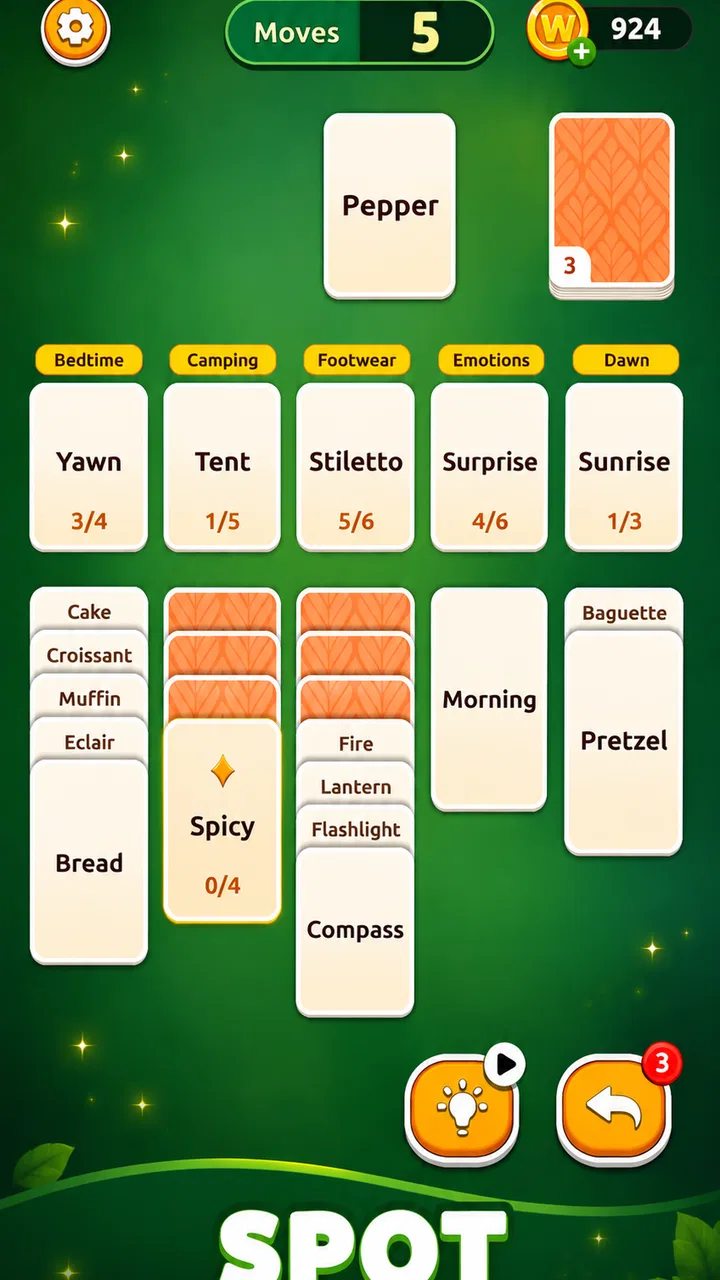
The early appeal comes from having an immediate objective that is easy to understand. I do not need to learn a complicated control scheme or study a large set of rules before starting. The word-and-solitaire combination gives each move a clear purpose: I look for useful words, make a choice, and try to improve the state of the board. That simplicity makes the first sessions approachable for casual players and for anyone who normally avoids more technical puzzle games.
What makes the opening feel more purposeful than a basic word search is the sense of clearing space. A word is not merely an answer that disappears after I find it; it contributes to the wider arrangement of the round. That creates a small planning question every time I play: should I use the obvious word immediately, or look for another possibility that may open a better route? Even without a complicated ruleset, this gives the first decisions some weight.
I also like that the opening does not require me to treat every round as a serious test. The game is suitable for a relaxed routine, such as playing during a coffee break, waiting for an appointment, or winding down before bed. A short session can still feel complete because the basic loop produces visible movement. That is useful for players who want progress without committing to a long uninterrupted game.
There is a practical tip here that is easy to miss: I get better results when I scan the whole arrangement before committing to the first word I notice. The fastest answer is not always the most useful answer. Looking for words that expose more of the board or preserve flexibility makes the game feel less like random tapping and more like a light planning exercise. This habit also helps reduce the frustration of reaching a position with fewer attractive choices.
Why the early loop is welcoming but not empty
Many casual word games rely entirely on the satisfaction of spotting a word. Solitaire Word Association adds a second layer by making the order of actions matter. I am not only asking whether a word exists; I am also considering what that word does to the remaining layout. That distinction gives the early stages a little more texture than a simple list of clues.
At the same time, the game remains accessible because the goals are not buried under a large collection of systems. I can start playing without first learning an elaborate economy, a complex character roster, or a competitive ranking structure. For a player who wants vocabulary-based entertainment rather than a full-time hobby, that restraint is a genuine advantage.
The trade-off is that the early experience may feel too gentle for people who need immediate intensity. There is no reason to expect the opening to behave like a timed spelling contest or a difficult logic puzzle. I would recommend it to someone who enjoys gradually settling into a pattern, not to someone looking for a burst of pressure from the first move.
Progress signals that make a quiet game feel worthwhile
Progress in this type of game is less about a single spectacular victory and more about recognizing improvement in how I approach the board. At first, I tend to take the most visible word. With more practice, I start checking for longer possibilities, hidden combinations, and moves that leave the arrangement easier to manage. That change in decision-making becomes its own reward.
The solitaire format also gives progress a physical quality. Clearing parts of the board provides a visual sign that my choices are working. I find that more satisfying than a word game where correct answers simply vanish into a counter. The board itself tells me whether I am creating room or allowing the remaining options to become awkward.
For everyday play, I suggest treating each round as a small exercise in sequencing rather than judging success only by completion. If I finish a session having found a better way to preserve options, the game has still delivered something useful even when the result is not perfect. This mindset makes the experience less punishing and helps the gradual challenge feel intentional.
The game has attracted a 4.9 average from around 237 ratings, with around 18 written reviews and over 10K installs. Those figures suggest that the available audience has responded warmly, although I would not use them as a substitute for deciding whether this particular style suits you. A high rating can confirm that the core idea works for many people, but it cannot make a calm word-solitaire loop appealing to someone who prefers fast action.
Small decisions matter more than rushing
One of my more useful discoveries was that speed is not always the best measure of a good session. Because the game combines word recognition with board management, pausing briefly can improve the quality of a round. I now try to identify several possible words before selecting one, especially when the board offers a choice between a short, obvious move and a more revealing move.
This approach makes the game a better fit for players who enjoy pattern recognition. It also gives parents or older players a gentle way to engage with vocabulary without turning the experience into formal study. I would not describe it as a language-learning course, but the repeated attention to spelling and word structure can make ordinary play mentally active.
There is a limit, though. Players who want detailed performance analysis may find the feedback less satisfying than in dedicated puzzle apps built around scores, timers, streaks, or competitive comparisons. Here, the pleasure comes primarily from solving and clearing. If you need extensive statistics to understand your improvement, a more measurement-heavy alternative may serve you better.
Difficulty and pacing: where the challenge earns its place
The most important pacing question is whether the game can remain interesting after the novelty of the word-solitaire combination fades. In my experience, the answer depends on how much I enjoy incremental challenge. The game is not compelling because every round introduces a radically different rule. It is compelling when familiar actions become harder to sequence and I must pay closer attention to the consequences of each choice.
That gradual structure is a good match for casual play. I can return after a break without feeling lost, because the central interaction remains understandable. The downside is that players seeking dramatic escalation may find the progression too even. A steady curve can feel comfortable, but it may not provide the sharp peaks of challenge found in specialist word puzzles or traditional competitive games.
I recommend playing with a deliberate rhythm rather than trying to force a marathon session. The game’s design is better suited to several compact visits than to hours of uninterrupted concentration. After a while, word scanning can become repetitive, and the same basic decision pattern may lose its freshness. Stopping before that point helps preserve the feeling that the next session is inviting rather than obligatory.
Another practical tactic is to separate recognition from selection. First, I scan for all the words I can see. Then I compare them based on how they affect the board. This two-step method makes difficult positions easier to read and prevents the first familiar word from controlling the entire round. It is a small adjustment, but it gives the game more strategic depth without requiring any advanced knowledge.
Who will enjoy the challenge, and who may not
I think the difficulty is best for players who like word puzzles but do not want every mistake to feel costly. It offers enough decision-making to reward attention, while keeping the overall mood relatively approachable. Someone who enjoys solitaire for its orderly, methodical character will probably understand the appeal quickly.
On the other hand, I would steer away from it if your priority is a pure card-solving experience. The word element is not a minor decoration; it is central to the way I interact with the board. Likewise, fans of head-to-head word games may miss the urgency that comes from playing against another person. This is a solitary, reflective style of challenge rather than a social contest.
It is also not the best choice for someone who dislikes repeated formats. The appeal comes from refining decisions within a recognizable loop, so variety must come from the words and the changing arrangement rather than from a completely different genre of activity. That is a fair trade, but it should be clear before installing.
Retention pressure, free access, and the cost of continuing
Because the game is free, it is easy to try without making an immediate financial commitment. That lowers the barrier for casual players who simply want to see whether the word-solitaire structure fits their routine. The free entry is especially useful here because the concept is more specific than ordinary solitaire and more relaxed than many word-game alternatives.
There are in-app purchases ranging from $1.99 to $69.99 per item. That range is worth keeping in mind before becoming deeply invested. I appreciate being able to begin for free, but any player who is sensitive to spending pressure should decide in advance whether optional purchases belong in their experience. Setting a personal limit is a sensible way to keep a relaxing game from becoming an unplanned expense.
The retention appeal comes from the desire to complete the next board and improve the next decision. That can be healthy when I choose to play because I am genuinely interested in solving. It becomes less attractive when the session starts feeling like an obligation to maintain momentum. My advice is to use the game as a break, not as a task list. If I stop enjoying the word search, there is little benefit in continuing simply because another round is available.
The age rating of Everyone makes the game broadly approachable, but that does not mean every player will have the same experience. Younger players may enjoy the word discovery, while adults may prefer it as a quiet mental break. The right audience is defined less by age than by tolerance for repetition and interest in vocabulary-based planning.
How it compares with familiar alternatives
Compared with classic solitaire, this game asks me to think about language as well as arrangement. That makes it more mentally varied for me, but it also removes some of the purity of a traditional card puzzle. If I want a familiar card layout and nothing else, standard solitaire is the cleaner choice.
Compared with anagram games, the board structure gives each word more consequence. I am not simply racing to identify as many combinations as possible. I am considering the order in which I use them and how much room they leave behind. The trade-off is that the pace is calmer, so players who enjoy rapid-fire word discovery may prefer a dedicated anagram game.
Compared with crossword-style apps, the experience is more tactile and less clue-driven. I do not approach it as a long-form vocabulary test with a single finished grid. Instead, I work through a sequence of smaller decisions. That makes it easier to fit into a spare moment, although it may feel less satisfying to people who want a substantial puzzle narrative or a strong sense of thematic construction.
In my view, the game occupies a useful middle ground: more thoughtful than a basic casual tap game, but less demanding than a serious word competition. That position is its identity, not a weakness, as long as the player wants exactly that middle pace.
My progression verdict after settling into the loop
Solitaire Word Association succeeds because its goals, progress, and challenge support one another without making the experience difficult to enter. The early objective is clear, the board gives useful visual feedback, and the difficulty can grow through better sequencing rather than through a pile of complicated mechanics. I found the strongest satisfaction in learning to delay an obvious move and choose the one that kept more possibilities open.
Its limitations are equally clear. The core loop can become repetitive for players who need constant novelty, and the calm pacing will not satisfy everyone. The presence of in-app purchases also means I would approach long-term play with a spending boundary in mind. None of these points undermines the basic game, but they matter when deciding whether it belongs in your regular rotation.
The current release is version 1.16.0, and the game is free to install on compatible Android devices. PlaySimple Games has made something approachable for people who like the order of solitaire and the satisfaction of finding words. I would recommend it to a friend who wants a quiet, repeatable puzzle for short breaks, especially someone who enjoys improving through observation rather than chasing speed.
I would skip it if you want multiplayer competition, a pure card game, or a constantly changing set of mechanics. For everyone else, the best way to judge it is to play slowly and pay attention to the order of your choices. That is where the game reveals its real value: not in a flashy feature list, but in turning a familiar solitaire feeling into a modest, thoughtful word challenge.
My final recommendation is favorable, with realistic expectations. Solitaire Word Association is not trying to replace every word or card game on your phone. It offers a focused blend of both, with enough planning to reward patience and enough simplicity to suit everyday use. When I want a calm puzzle that gives me a reason to look twice before making a move, this is a worthwhile option.
FAQs for Solitaire Word Association
01What is Solitaire Word Association and how does it work?
Solitaire Word Association is a unique blend of classic solitaire gameplay with a word puzzle twist. Players must strategically place cards to form words, combining elements of strategy and vocabulary skills. The game challenges users to think ahead and plan their moves to maximize their score while solving word puzzles.
02Is Solitaire Word Association free to play or are there in-app purchases?
The game is free to download and play, offering a range of features accessible without payment. However, there are optional in-app purchases available, which include items like hints, game boosters, and ad removals. These purchases enhance the gameplay experience but are not necessary to enjoy the core features.
03Can Solitaire Word Association be played offline?
Yes, Solitaire Word Association can be enjoyed offline. This feature makes it convenient for users who want to play without an internet connection, such as during travel. However, certain features, like leaderboards and social sharing, will require an internet connection to function.
04How does Solitaire Word Association ensure user privacy and data security?
The app adheres to strict privacy policies to protect user data. It collects minimal personal information, primarily for enhancing the gameplay experience. Users can review the privacy policy within the app settings to understand what data is collected and how it is used, ensuring transparency and security.
05What are the system requirements for Solitaire Word Association?
Solitaire Word Association is designed to run smoothly on most modern Android and iOS devices. For Android, it requires version 5.0 or higher, while iOS devices need to have iOS 11.0 or later. The game is optimized for both phones and tablets, offering a seamless experience across devices.
Pros
- Engaging word puzzles keep you entertained.
- Intuitive interface for easy navigation.
- Offline mode available for play anywhere.
- Regular updates with new levels.
- Minimal ads for uninterrupted gameplay.
Cons
- Limited hints can stall progress.
- In-app purchases can be pricey.
- Graphics aren't very customizable.
- No multiplayer mode available.
- Some levels feel repetitive.

Solitaire Word Association
Gallery